
Plant Reference
A care and reference guide for plants from Temporary Collection — Volume 1. These are young plants, so some of the characteristics shown in the mature reference photographs will develop gradually with time, light and climbing support.
01 / Collector
Japanese Tricolor
Monstera adansonii variegata
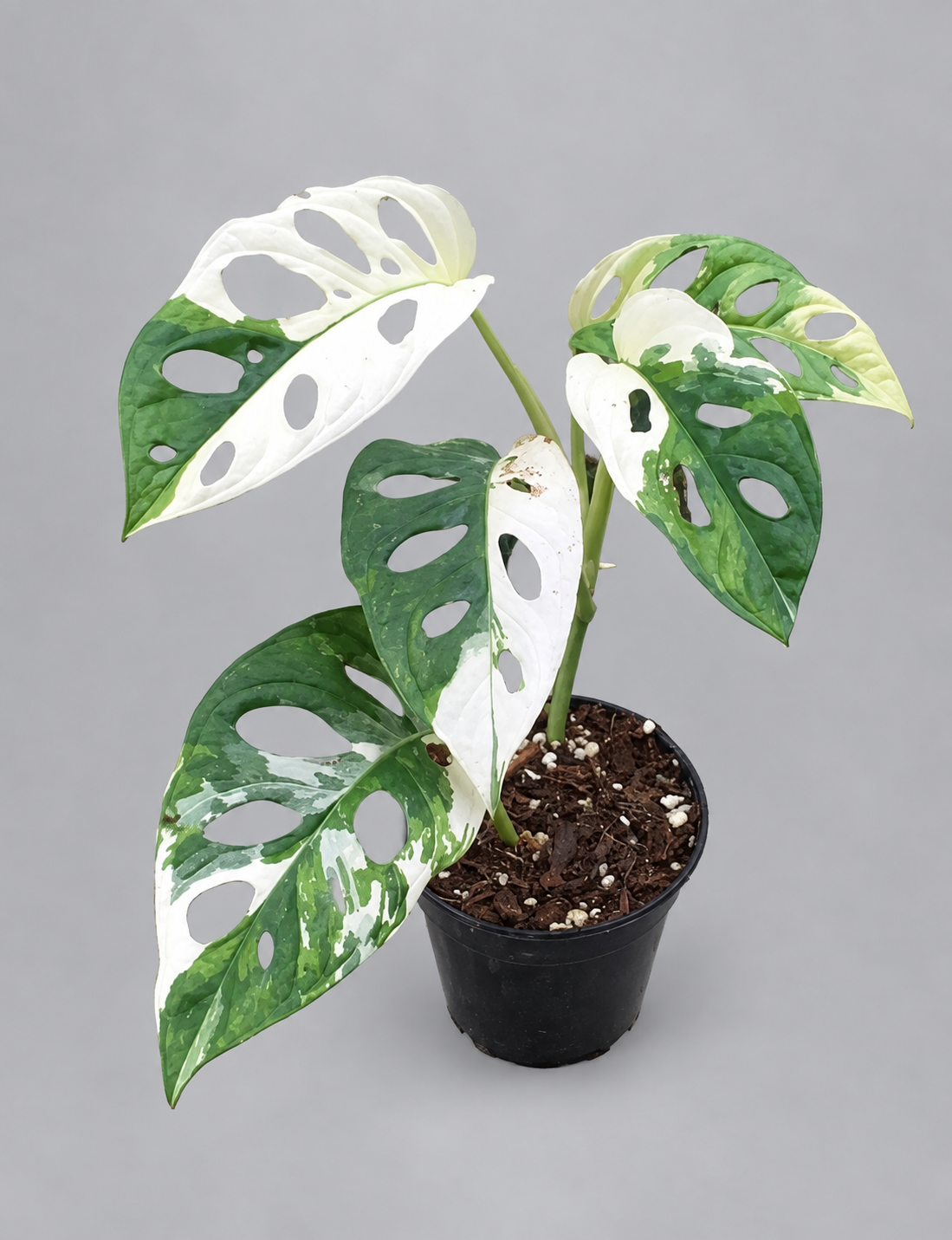
Mature form / reference specimen
About
A variegated form of Monstera adansonii known for irregular green, pale green, cream and white patterning. This collection was locally propagated from stock originally sourced from legendary Japanese horticulturist Kunzo Nishihata. Young plants can look considerably simpler than mature specimens; variegation and fenestration vary naturally from leaf to leaf.
As it matures
This is a climbing Monstera. Given bright light and a vertical support, successive leaves can become substantially larger and develop more pronounced openings. A moss pole or plank encourages the mature growth habit better than allowing the vine to trail indefinitely.
First few weeks at home
Keep the plant in its current pot while it acclimates unless there is an obvious problem with the soil or roots. Two to three quiet weeks are preferable to immediately changing the pot, soil, light level and watering routine at the same time.
LIGHT
Bright indirect light. An east or north window can work well; near a south or west window, protect it from prolonged hot afternoon sun.
WATER
Water thoroughly, then wait until roughly the upper 1–2 inches have dried and the pot feels noticeably lighter. Do not keep the root zone continuously wet.
SOIL
Loose, oxygen-rich aroid mix with good drainage. Potting mix combined with bark and perlite or pumice works well.
HUMIDITY
Normal household humidity is workable. Around 50–70% is ideal, particularly with good airflow.
TEMPERATURE
Approximately 65–85°F. Protect from prolonged temperatures below about 60°F.
FEEDING
A balanced fertilizer at reduced strength every 3–4 weeks during active growth is generally sufficient.
REPOTTING
Repot when the roots substantially occupy the current container. Increase pot diameter only about 1–2 inches.
Troubleshooting
Yellowing lower leaves should prompt a check of soil moisture before more water is added. White portions contain little or no chlorophyll and are naturally more fragile, so browning there is not unusual. Small leaves or limited fenestration usually reflect youth, lower light or lack of climbing support. Variegation cannot be forced and may vary considerably from one leaf to the next.
02 / Collector
Dragon Tail
Epipremnum pinnatum
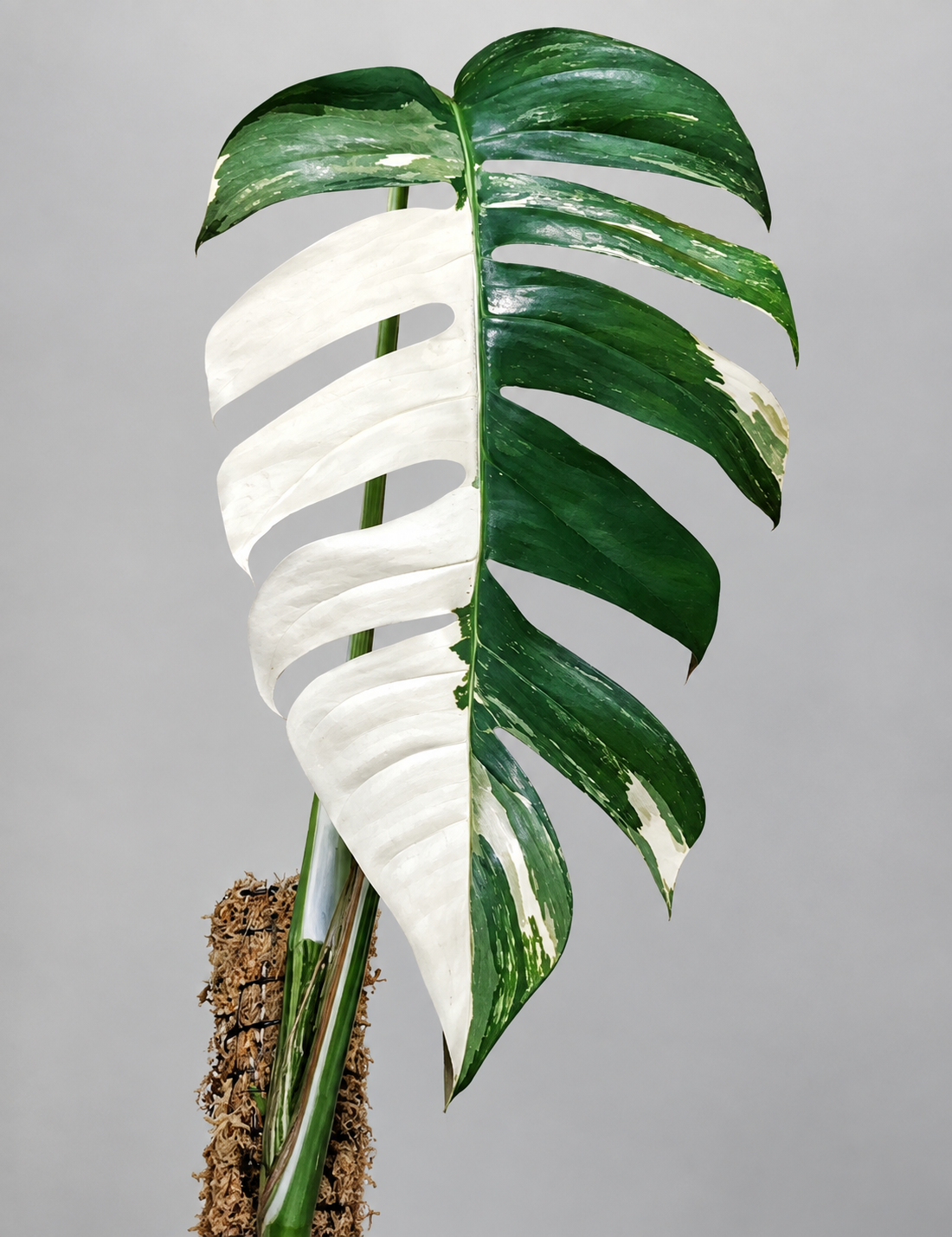
Mature form / reference specimen
About
Epipremnum pinnatum is a tropical climbing aroid related to pothos. Its juvenile leaves can appear surprisingly simple, while mature climbing growth develops the deeply divided foliage responsible for the common name Dragon Tail.
As it matures
The dramatic mature leaf shape develops gradually. Bright light, time and a surface to climb all contribute. Plants allowed to climb vertically generally produce larger and increasingly divided leaves much sooner than unsupported vines.
First few weeks at home
Keep conditions stable while the young root system acclimates. Avoid immediately moving a small plant into an oversized pot: excess soil can remain wet much longer than the plant can use the moisture.
LIGHT
Medium to bright indirect light, with brighter conditions preferred for compact growth and maturation.
WATER
Water thoroughly and allow approximately the upper third of the mix to dry before watering again.
SOIL
Fast-draining, airy aroid mix with bark, perlite or pumice.
HUMIDITY
Approximately 45–70% works well. Air movement is beneficial.
TEMPERATURE
Approximately 65–85°F.
SUPPORT
Strongly recommended if the goal is mature divided foliage.
FEEDING
Balanced fertilizer at about half strength every 3–4 weeks during active growth.
Troubleshooting
A lack of splits usually means the plant is still juvenile rather than unhealthy. Long spaces between leaves often indicate insufficient light. Yellow foliage should prompt a moisture check. Some young plants from variegated stock may currently show little or no visible variegation; future variegation should never be assumed or guaranteed.
03 / Collector
Variegated Micans
Philodendron hederaceum ‘Micans’
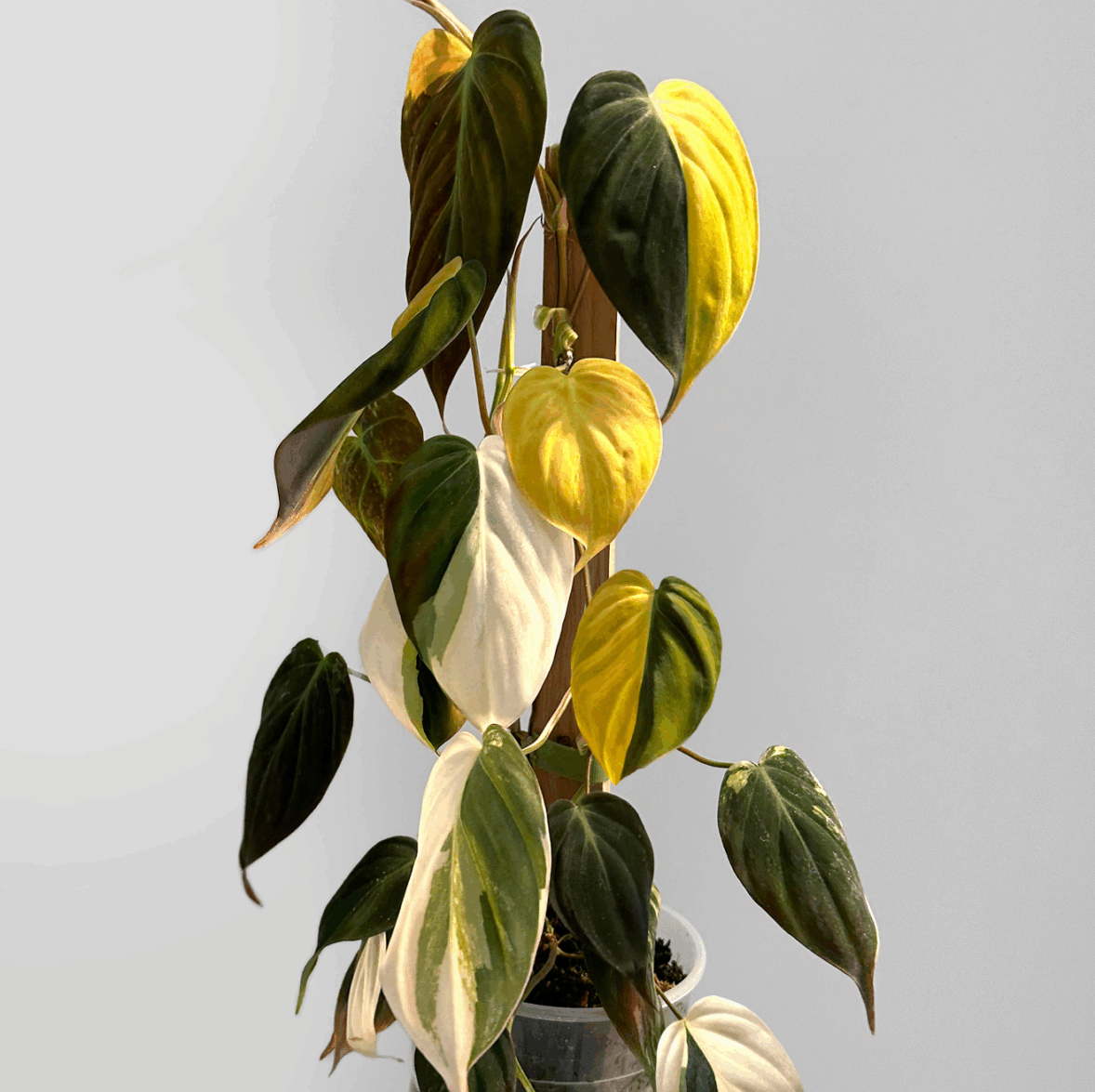
Mature form / reference specimen
About
Micans is a velvet-leaved climbing philodendron with heart-shaped foliage that can shift between green, bronze, copper and burgundy depending on age and light. Variegated plants introduce cream, yellow-green or lighter patterned areas over the naturally iridescent foliage.
As it matures
Micans is often sold as a trailing plant, but it naturally climbs. Training it upward on a pole or plank can produce progressively larger leaves and a more mature growth habit.
First few weeks at home
These young plants have relatively fine root systems. Avoid keeping them continuously damp, but do not leave them bone dry for extended periods. The weight of the pot is particularly useful for learning their watering rhythm.
LIGHT
Medium to bright indirect light. Brighter conditions generally produce tighter, stronger growth.
WATER
Water when the upper 1–2 inches are dry and the pot has become noticeably lighter.
SOIL
Loose, well-aerated mix with reliable drainage.
HUMIDITY
Around 50–70% is ideal, although normal household humidity is usually acceptable.
TEMPERATURE
Approximately 65–80°F.
SUPPORT
Optional for trailing growth; recommended for larger mature leaves.
FEEDING
Feed lightly every 3–4 weeks during active growth.
Troubleshooting
Bronze or reddish new foliage is normal. Small leaves and long internodes often indicate lower light or unsupported growth. Yellowing frequently points to a root zone staying wet too long. One greener leaf on a variegated plant does not automatically mean the plant has reverted; evaluate several successive leaves.
04 / Collector
Red Anderson
Philodendron ‘Red Anderson’
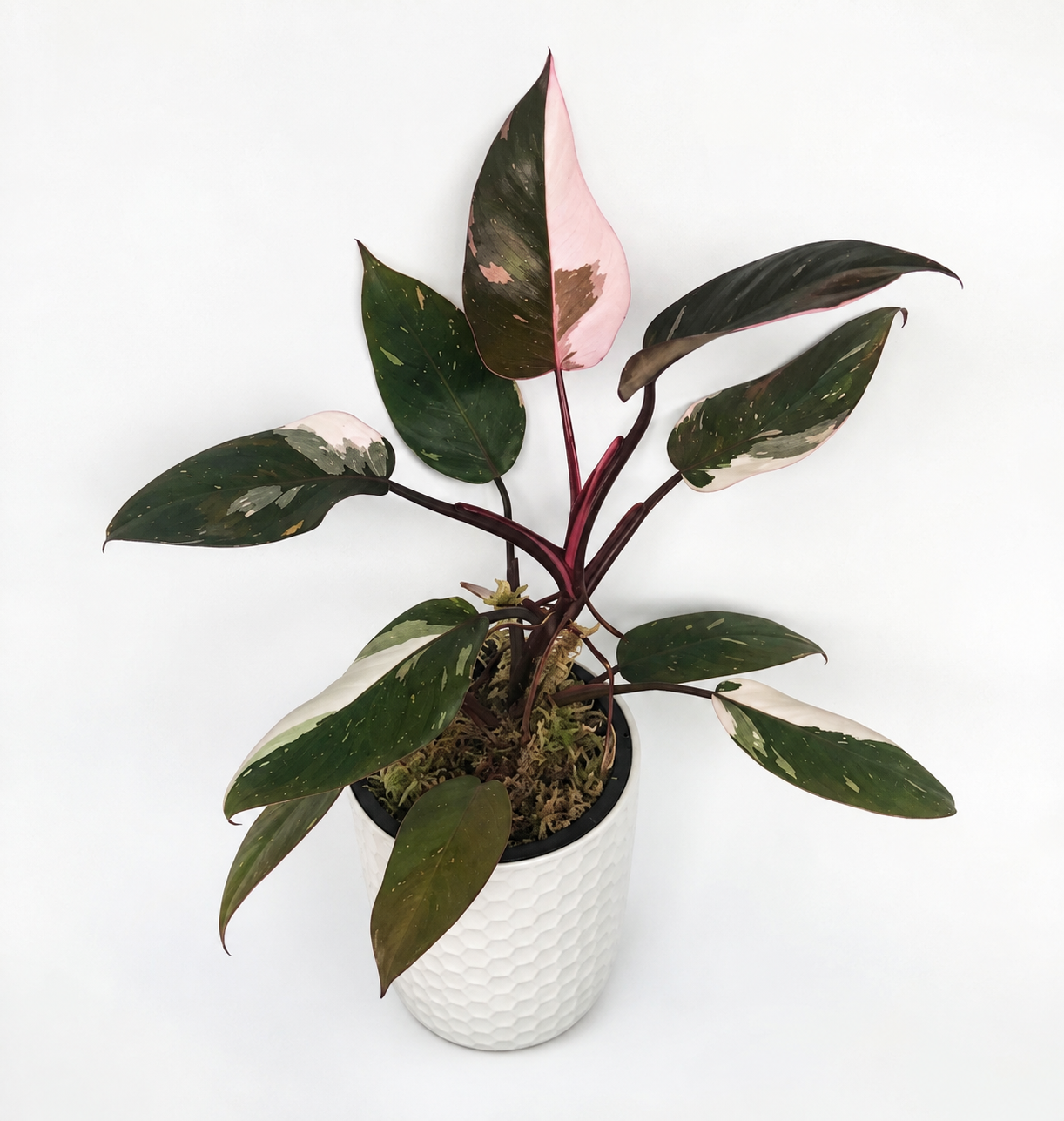
Mature form / reference specimen
About
Red Anderson is a climbing philodendron grown for the contrast between dark foliage, cream-to-white variegation and red or pink pigmentation in its stems, petioles and emerging growth. Variegation is naturally variable. Its exact horticultural origin is not especially well documented, so lineage claims should be treated cautiously.
As it matures
Red Anderson grows as an upright climbing vine. A pole or plank gives the stem support and can encourage larger leaves as the plant matures. Individual leaves can vary dramatically in both color and variegation.
First few weeks at home
Allow the plant to establish before making decisions based on a single leaf. Avoid aggressively increasing light or pruning a young plant simply to try to produce more variegation.
LIGHT
Bright indirect light. Avoid prolonged hot direct sun on pale portions of the leaves.
WATER
Water thoroughly after roughly the upper quarter to third of the mix has dried.
SOIL
Chunky, free-draining aroid mix.
HUMIDITY
Approximately 50–70% is ideal.
TEMPERATURE
Approximately 65–85°F.
SUPPORT
Recommended as the plant begins actively climbing.
FEEDING
Reduced-strength balanced fertilizer every 3–4 weeks during active growth.
Troubleshooting
A greener leaf can be completely normal. Several consecutive all-green leaves may indicate reversion, but young plants should be given time before pruning. Pale tissue is naturally more prone to browning. If a plant is drooping while the soil is still wet, do not automatically add water; first check whether the root zone is remaining saturated.
05 / Collector
Pink Princess
Philodendron erubescens ‘Pink Princess’
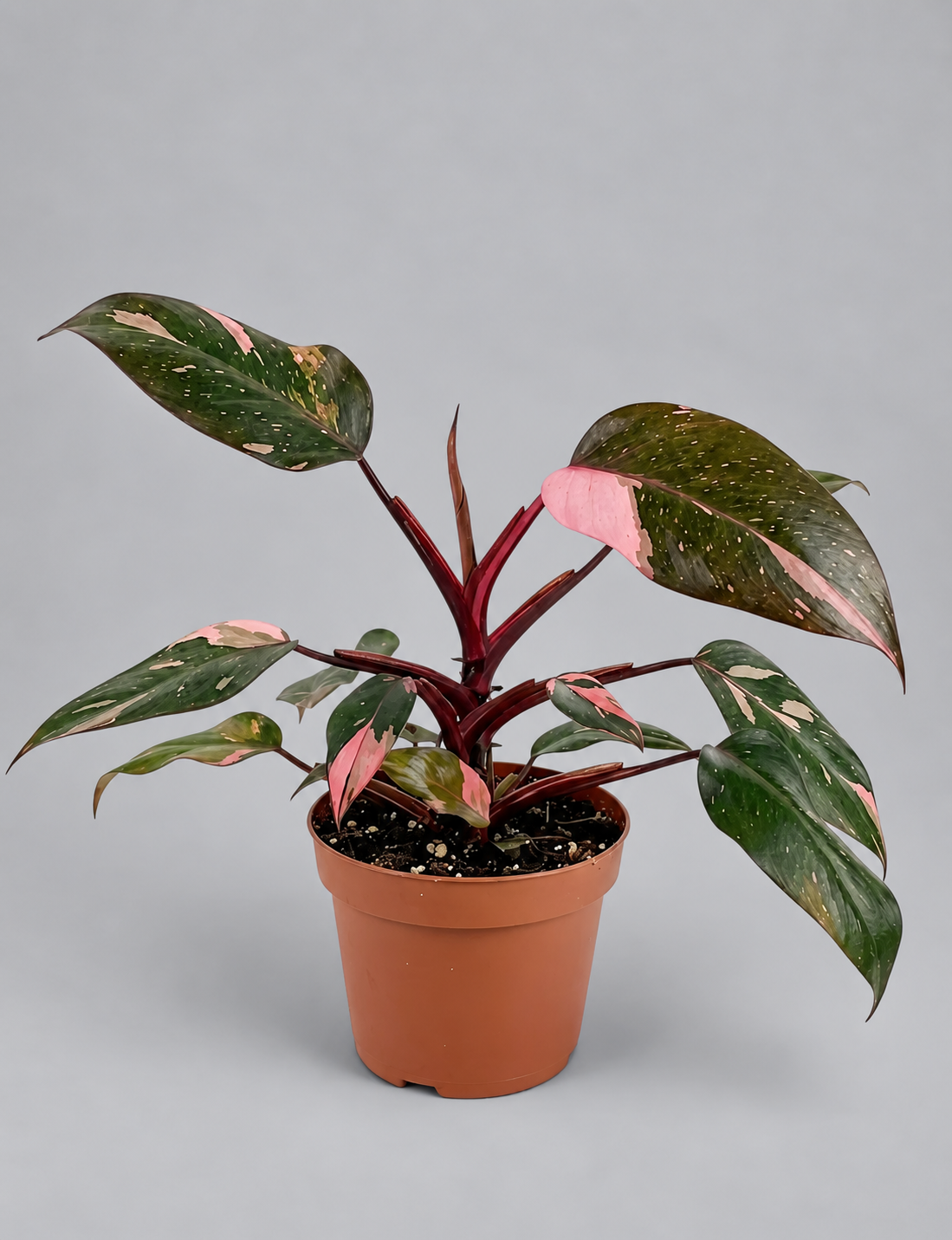
Mature form / reference specimen
About
Pink Princess is a climbing philodendron selected for pink variegation against dark green foliage. Every leaf develops differently, from subtle speckling to large blocks of pink. Green tissue remains essential because it performs most of the plant’s photosynthesis.
As it matures
Although often sold as a small tabletop plant, Pink Princess is a true climber. With time, bright light and vertical support, the stem thickens and the foliage can become much larger and darker.
First few weeks at home
Let the plant acclimate before repotting or pruning. A temporary pause in growth after moving environments is not necessarily a problem. Judge the health of the root zone and new growth rather than the amount of pink on any one leaf.
LIGHT
Bright indirect light. Gentle morning sun can be useful after acclimation, while strong afternoon sun can damage pink and pale tissue.
WATER
Water deeply when roughly the upper 1–2 inches, or upper quarter of the pot, have dried.
SOIL
Loose and airy aroid mix with excellent drainage.
HUMIDITY
Around 50–70% is excellent, although normal indoor humidity is workable.
TEMPERATURE
Approximately 65–85°F.
SUPPORT
Recommended for mature growth.
FEEDING
Balanced fertilizer at reduced strength approximately every 3–4 weeks during active growth.
Troubleshooting
Pink variegation cannot be forced. An almost entirely pink leaf has very little chlorophyll and may not persist as long as a balanced leaf. Pink portions are naturally more susceptible to browning, especially with dry air, inconsistent watering or excessive sun. Several consecutive all-green leaves may suggest reversion, but avoid aggressive pruning on a very young plant.
A note on watering
None of these plants should be watered according to a fixed weekly schedule. Pot size, soil, temperature, light, humidity and season all change how quickly a plant uses water. Learn the weight of the pot immediately after watering and compare it as the mix dries.
All plants should be grown in containers with drainage. When in doubt, check the root zone before adding more water.